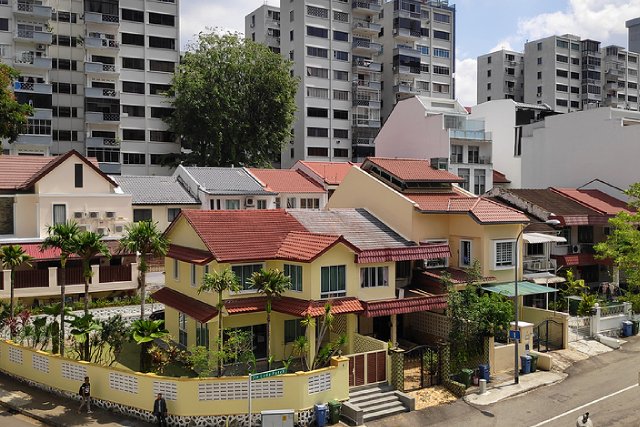
Owning a landed property in Singapore is often seen as the pinnacle of homeownership. With more space, privacy, and the freedom to design your home as you wish, it’s no surprise that many aspire towards it. For those who can afford it, especially families looking to settle down for the long term, a landed home offers a sense of stability and luxury that high-rise living doesn’t always provide.
But while it might be financially possible, many potential homeowners, particularly Permanent Residents (PRs), wonder whether they’re even eligible to purchase one. So, can PRs buy a landed property in Singapore? The answer isn’t a simple yes or no. Let’s break down what PRs need to know before dreaming of a white picket fence in the heartlands or a sleek bungalow in District 10.
What types of landed property exist in Singapore?
Before diving into eligibility, it helps to understand what qualifies as landed property. In Singapore, landed homes typically include terrace houses, semi-detached houses, bungalows, and Good Class Bungalows (GCBs). These properties sit on their own land, which differs from condominium units where ownership is shared.
Some of these homes are strata-titled (think cluster houses), which come with shared facilities like pools and gyms. But the main appeal of landed property is the control over the land itself, which is perfect for customisation or even redevelopment, especially with the help of design and build contractors in Singapore who can manage the whole process from concept to completion.
The reality for PRs: Can they buy landed property?
Here’s the short answer: PRs can buy landed property in Singapore, but only under very specific conditions.
The Singapore Land Authority (SLA) governs foreign ownership of residential property. According to the Residential Property Act, PRs are considered foreigners. This means they must first obtain approval from the Land Dealings Approval Unit (LDAU) before they can purchase landed property in Singapore.
And even then, approvals are generally limited to landed properties located within a designated non-restricted zone, usually on Sentosa Cove. For landed homes on the mainland, approvals for PRs are extremely rare.
What the application process looks like
If you’re a PR who’s genuinely interested in owning landed property, you’ll need to apply to the LDAU. The application is a rigorous process that evaluates several key criteria:
- Duration of PR status: The longer you’ve been a PR, the better.
- Economic contribution: High earners or business owners contributing to the local economy may have a higher chance.
- Family ties and social integration: Having Singaporean family members or a long history of living here is a plus.
Even if you meet these, there’s no guarantee you’ll get approval. The government’s priority is to reserve landed housing, an already scarce resource, for Singapore citizens.
Why are restrictions so strict?
Land is extremely limited in Singapore, and landed homes are the rarest form of housing, making up only about 5% of the residential market. To ensure Singaporeans aren’t priced out, the government enforces strict rules to prioritise locals.
Additionally, landed properties are seen as more than just homes; they’re legacies. Allowing unrestricted foreign access would likely inflate prices and reduce accessibility for citizens.
Alternatives for PRs: What can you buy?
If you’re not approved for a landed home, there are still solid alternatives. PRs can freely purchase:
1. Private condominiums and executive condominiums (ECs) (after the 10-year minimum occupation period).
2. Strata-landed properties in approved developments.
3. Commercial properties with fewer restrictions.
And if your dream is to eventually own a landed home, working towards citizenship could open the door. Once you’re a Singapore citizen, you’ll be able to purchase landed property on the mainland without needing special approval, though you’ll still need to meet certain financial and planning conditions.
Building or renovating after purchase
If you’re lucky enough to gain approval as a PR or are already a citizen, your next step might involve rebuilding, extending, or renovating your new home. Whether it’s a single-storey or multi-storey landed home, it’s crucial to engage professionals who understand the complexities of such projects in Singapore’s tightly regulated construction environment.
You’ll likely need the expertise of design and build contractors, who can offer end-to-end services from architectural planning to interior finishes. They’ll also be familiar with local zoning laws, submission procedures to the Building and Construction Authority (BCA), and structural safety requirements.
Similarly, homeowners planning smaller-scale renovations, like adding a room, extending a kitchen, or reconfiguring the façade, can benefit from working with an A&A contractor (Addition & Alteration). These professionals handle structural changes that don’t involve a complete rebuild but still require compliance with URA and BCA regulations.
Is buying a landed property worth it for PRs?
If you’re a PR hoping to own a landed property, it’s important to weigh the odds and the effort required. For some, going through the approval process might not be worth the uncertainty and limitations. But for others, especially those on the cusp of citizenship or who are long-term PRs deeply integrated into Singaporean society, it could be a rewarding path. In addition, there may be additional taxes to purchase private properties as a PR. One key factor that can significantly affect your decision is the Additional Buyer’s Stamp Duty (ABSD). As a PR, you’re subject to a higher ABSD rate compared to Singapore citizens. For instance, PRs buying their first residential property must pay 5% ABSD, while any subsequent purchases incur even higher rates. These additional taxes can add a substantial amount to your overall cost, making landed properties less financially attractive, especially when paired with the already high price tags of such homes.
For some PRs, especially those who are close to obtaining citizenship or have long-term plans in Singapore, the investment may still be worthwhile despite the tax implications. For others, the combination of tax burdens and ownership restrictions may make the process feel limiting and uncertain.
In any case, having a good understanding of the restrictions, requirements, and construction landscape will ensure you’re making informed decisions every step of the way.
Conclusion
Whether you’re transforming a landed home or embarking on a commercial project, Kang Sheng Engineering is your trusted partner for all things construction. We offer design-build services and general contracting expertise tailored to residential and commercial needs. With years of experience and a deep understanding of Singapore’s building regulations, our team is ready to bring your vision to life reliably and professionally.
Let’s create spaces that work, last, and feel like home.