Expansion is often a natural milestone for a growing organisation. More clients, bigger projects, and additional staff members all point to business success, but they also bring one inevitable question: do you have enough space to keep everything running smoothly?
An increase in demand typically means hiring more talent and acquiring more resources, and these new assets need to be accommodated properly. Failing to do so risks hampering productivity, employee morale, and even customer experiences. For Singaporean businesses, where office rental costs are already among the highest in Asia, the decision to expand office space is not something to take lightly.
Below, we’ll walk through the signs that suggest your company might need to work with design and build contractors in Singapore to expand your office, discuss how much space is actually “ideal”, and share some practical ways to optimise your current office before you commit to leasing or renovating more square footage.
What is the ideal amount of office space for a business?
There’s no one-size-fits-all answer to how much office space a business should have. A start-up with five employees will have vastly different needs compared to a mid-sized enterprise of 50 staff. Still, having a framework for calculation helps you make an informed choice.
Here are a few factors to consider:
- Team size (current and future)
Don’t just calculate based on the people you employ today. Consider growth projections and onboarding plans for the next few years. An expanding sales team, for instance, will require more workstations, meeting rooms, and collaborative spaces.
- Type of space
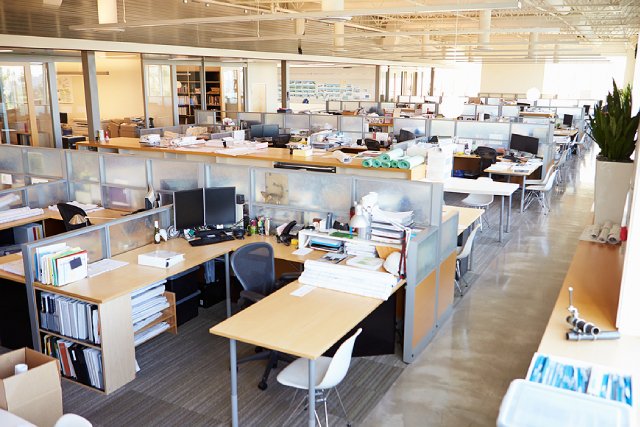
Not all office layouts are created equal. Some businesses thrive in open-plan environments that encourage collaboration, while others require private rooms for confidentiality, such as legal firms or consultancies. Many SMEs are now exploring flexible layouts that combine both, striking a balance between focus and teamwork.
- Common areas
Employee space extends beyond desks. Receptions, meeting rooms, break areas, and pantries all contribute to a functional office. Clients and partners also form impressions based on these shared areas, so underestimating their importance could hurt your business image.
When deciding whether to leverage commercial construction services to expand, it’s also helpful to think long-term. Part of understanding what to expect for commercial construction is recognising how the right partner can future-proof your investment. For example, some businesses partner with firms that excel as both commercial contractors and landed house builders, since their multifaceted expertise allows them to create office layouts that support modular or scalable adjustments as the company grows. This approach may save significant costs compared to relocating entirely in just a few years.
Main indicators that you need more office space
So, how do you know when it’s time to act? Here are some clear signs that your business may be outgrowing its current office:
1. Overcrowding is becoming obvious
It’s exciting to welcome new team members, but problems arise when there’s no space to seat them comfortably. If staff are squeezed into corners or desks are being shared unproductively, it’s a sure sign the office is too small.
While hybrid working can ease the crunch, it’s not always ideal for every business function. For example, client-facing roles often require in-office presence. Overcrowding can also spill into other areas, such as the car park. If your team and visitors are struggling to find parking, it’s another signal that space has become inadequate.
2. There’s no room for new equipment
Growing businesses often need to invest in new technology like servers, video conferencing setups, or larger printers. If there’s nowhere to put them, workflows may suffer. For IT-heavy companies, insufficient space for proper cabling and cooling equipment could even compromise security and efficiency.
3. Client interactions are compromised
Nothing leaves a worse impression on a client than being asked to wait because all meeting rooms are occupied. In Singapore, where customer experience plays a huge role in business reputation, cramped meeting facilities can be a deal-breaker. If you’re turning away opportunities because your space cannot support professional interactions, it’s time to reconsider your layout.
4. Employees need more amenities
Investing in employee well-being is essential. Spaces like relaxation areas, wellness corners, and even small libraries contribute to better morale. These don’t directly affect day-to-day operations but foster innovation, collaboration, and loyalty. Without sufficient space for such amenities, your workforce may feel undervalued.
Tips to optimise your office space before expanding
Expanding your office footprint, whether by renting a larger unit or renovating existing premises, requires significant investment. But before making that leap, there are practical steps you can take to maximise your current space.
1. Experiment with remote or hybrid working
Singaporean companies increasingly adopt hybrid models where staff split their time between home and the office. Even encouraging employees to work remotely two or three days a week can ease congestion without compromising productivity.
If proximity to the main office is crucial, consider renting a nearby co-working space for part of your team. This flexible arrangement keeps employees close while avoiding the immediate costs of a full-scale office move.
2. Declutter and reassess essentials
Many offices accumulate redundant equipment over time – old filing cabinets, unused monitors, or outdated promotional materials. Storing these items off-site in affordable self-storage facilities can free up much-needed room.
3. Go digital with documents
Filing cabinets take up a surprising amount of space. By digitising records and using secure cloud storage, you not only reclaim physical space but also improve efficiency and data accessibility. Tools like e-signatures are now widely accepted in Singapore, making the transition to paperless systems smoother than ever.
4. Invest in space-saving furniture
Bulky desks and oversized cupboards can overwhelm an office. Opt for modular, lightweight furniture designed to maximise flexibility. Items like extendable meeting tables or collapsible chairs can make a big difference.
5. Think vertical
Walls are often underutilised. Install vertical shelving, smart organisers, or functional décor to take advantage of your office’s height. This approach works especially well for offices in older shophouses or commercial buildings that may have generous ceiling heights but limited floor area.
Alternatives to traditional office expansion
Not every business can or should jump straight into leasing additional office space. Alternatives worth considering include:
- Flexible leases: Shorter-term rentals give you room to grow without locking into long commitments.
- Serviced offices: Providers offer fully equipped workspaces where you only pay for what you use.
- Renovation with expansion in mind: If you own your premises, working with professionals such as a landed house builder who also handles commercial projects can be surprisingly effective. They may repurpose or extend spaces creatively, balancing cost with long-term usability.
Conclusion
Deciding whether your business requires more office space comes down to balancing costs with functionality. Before rushing into expansion, try maximising your current space through the suggestions above. For some businesses, these solutions may buy valuable time; for others, they may highlight the inevitability of moving into a bigger, better-equipped office. Ultimately, your office should not only serve operational needs but also reflect your company’s culture and ambitions. With thoughtful planning, you can ensure your workplace remains a strong foundation for future growth.
Expanding your workspace is all about creating a workspace that supports your growth. Kang Sheng Engineering offers design-build services tailored to commercial needs, ensuring compliance, efficiency, and long-term value. Let us help you plan and build an office space that grows with your business.