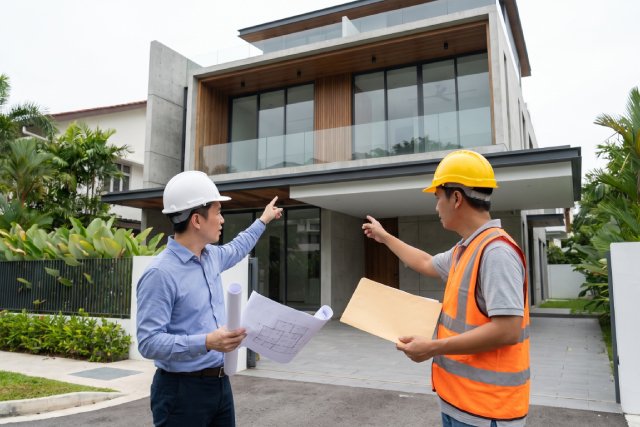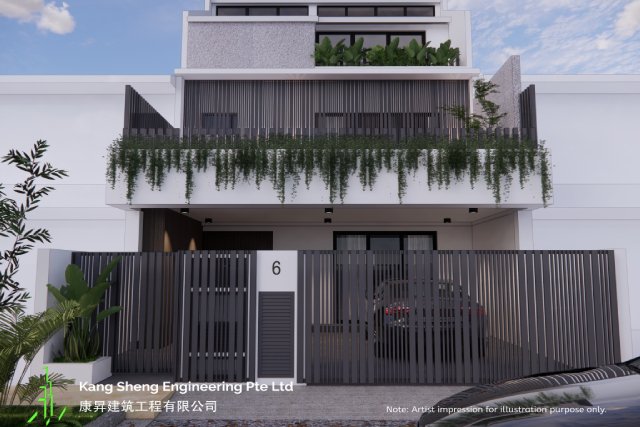
Building a landed home as your new place to live is exciting. You finally get to shape a space that suits your lifestyle, your family’s routines, and how you want to grow into the house over time. At the same time, landed housing in Singapore comes with clear rules. These are not meant to limit creativity, but to keep neighbourhoods safe, liveable, and fair for everyone.
If you have lived in an HDB flat all your life, this can feel unfamiliar. You may be used to renovation guidelines rather than planning controls that affect the entire building form. Once you move into landed housing, Urban Redevelopment Authority (URA) rules start to shape how high you can build, how close you can go to boundaries, and even how your roof is designed. Understanding these early helps you avoid costly redesigns later.
What envelope control really means
Envelope control is URA’s way of defining the maximum building volume allowed on a landed plot. Instead of only saying “you can build two storeys,” URA uses a three-dimensional envelope. Your entire house, including roof forms and attic spaces, must fit within this invisible boundary.
This approach gives some flexibility. You can explore split levels, double-volume spaces, or creative roof shapes, as long as everything stays within the permitted envelope. It also ensures neighbouring houses still enjoy light, ventilation, and privacy.
Height limits for landed homes
Height is usually the first thing homeowners ask about. In most landed housing areas, the maximum height is defined by storeys rather than metres, although both are used together.
Common height controls include:
- Two-storey landed homes, sometimes with a mezzanine and attic, which is 12m in full height.
- Three-storey landed homes, with an attic which is 15.5m in full height.
Setbacks and why they matter
Setbacks define how far your building must be from the plot boundaries. These distances vary depending on the side of the house and the road category it faces.
Typical setback considerations include:
- Front setbacks, which maintain a consistent streetscape. They are dependent on the road category along the frontage. In the usual case, the setback is 7.5 m. Certain road setbacks can go up to 24 m, such as for a Category 1 road.
- Side setbacks, which are applicable for corner terraced houses, semi-detached houses, and detached houses. They may also be subject to road setbacks. In the usual case, the setback is 2 m.
- Rear setbacks, following a 2m setback. However, rear yard coverage may be allowed if the property abuts a back alley.
Corner plots often have additional requirements, as they face two roads. Setbacks also influence where balconies, overhangs, and bay windows can be placed.
Building lines and street-facing controls
Building lines are imaginary lines set back from the road boundary. Your main building mass must sit behind these lines. This keeps roads visually open and allows for future road widening or infrastructure works.
In some landed housing areas, especially along high category of roads, these controls are stricter.
Roof forms and attic rules
Roof design is closely tied to envelope control. Flat roofs, pitched roofs, and hybrid designs are all possible, but each affects how much usable space you get.
For pitched roofs with attics, URA looks at:
- Roof slope angles (at 45 degrees)
- Maximum ridge height
Flat attic storeys may offer roof terraces, but parapet heights and service areas still count towards the overall envelope.
Why envelope control affects your layout
Envelope control is not just about height. It shapes how your rooms stack, where staircases go, and how much daylight reaches interior spaces. A design that looks great on paper may fail envelope checks if volumes push too close to the boundary or exceed allowed heights at certain points.
This is why working with an experienced landed house builder early on matters. Beyond construction, understanding what they actually do helps homeowners see how planning, design coordination, and regulatory checks come together long before any concrete is poured.
Common misconceptions homeowners have
Many homeowners assume that buying a larger plot automatically means they can build higher. This is not always true. Zoning, neighbourhood character, and plot configuration all play a role. Other common misunderstandings include:
- Thinking attics are the same as full storeys
- Assuming balconies and overhangs are always exempt
- Believing roof terraces do not count towards height limits
Clarifying these early saves time and prevents frustration during submissions.
How URA guidelines interact with other agencies
URA controls the envelope, but other agencies also weigh in. Building and Construction Authority guidelines affect structural safety. SCDF requirements influence staircase design and fire access. PUB rules may affect drainage and platform levels.
A compliant landed home design balances all these requirements without compromising liveability. That balance usually comes from careful coordination rather than last-minute adjustments.
Planning ahead for smoother approvals
Envelope control checks happen during planning submissions. If your design exceeds limits, revisions are required before approval is granted. This can delay your project and increase professional fees.
Good planning includes:
- Early site analysis
- Massing studies before finalising layouts
- Clear communication between homeowner, architect, and builder
When these steps are aligned, envelope control becomes a guide rather than a hurdle.
Designing within limits without feeling restricted
Many well-designed landed homes in Singapore fully comply with URA envelope control while still feeling spacious and personalised. Double-volume living areas, internal courtyards, and clever roof profiles all work within the rules.
Instead of asking “how high can I build?”, a better question is “how can I design well within what is allowed?” This mindset often leads to more thoughtful and comfortable homes.
Conclusion
URA envelope control guidelines shape every landed home in Singapore, from its height to its overall form. While the rules may seem technical at first, they exist to protect homeowners and neighbourhoods alike. With the right guidance, these controls can be navigated smoothly and confidently.
If you are planning a rebuild or a new landed home, Kang Sheng Engineering is here to help. We provide design-build services and general contracting services for both residential and commercial projects, guiding you from early planning through to completion with clarity and care.