21 July is a meaningful date in Singapore. It marks Racial Harmony Day, a time when schools across the nation dive into celebrating the country’s multicultural roots. From dressing up in traditional attire to trying cuisines of different cultures and understanding each other’s histories, the day highlights the importance of unity in diversity, something we’ve long taken pride in as Singaporeans.
While this spirit is visibly embraced in schools and community events, it’s also worth exploring how this same mindset can shape industries like construction and contracting. Singapore’s built environment is made up of the hands and minds of many. But beyond just having people from different backgrounds on site, what happens when multiculturalism becomes a core strength? How can the industry take a leaf from Racial Harmony Day and apply those values to the worksite?
More than just manpower
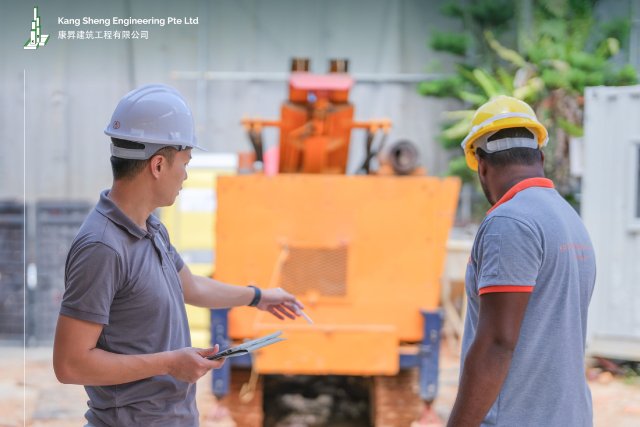
Contracting and construction often involve teams of engineers, architects, site managers, and labourers, many of whom come from different parts of the world, like Bangladesh, India, China, Myanmar, and, of course, Singapore itself. Diversity in these teams is more than just a demographic statistic; it’s an everyday reality on construction sites.
But what sets truly successful teams apart is how well they work together. A multicultural team brings varied perspectives to problem-solving. For example, a worker from a different country may offer a construction technique passed down from generations, while a local engineer might suggest a more tech-driven approach. When both ideas are heard and considered, the team builds better.
Communication as a superpower
Of course, managing diversity comes with its challenges. Language barriers, cultural misunderstandings, or different work expectations can lead to friction. However, when contractors make communication a priority, whether through translated safety instructions, visual guides, or team huddles, miscommunication becomes less of a problem.
Teams that understand one another perform better, not just because of fewer mistakes but because there’s trust. A Malaysian foreman who knows how to bring together a team made up of five nationalities is practising the spirit of racial harmony daily, not in traditional dress, but in collaboration, empathy, and leadership.
Learning from one another
Working alongside colleagues from diverse backgrounds also means more opportunities to learn. A junior site assistant may pick up basic Mandarin phrases just by working closely with a Chinese-speaking peer. A project manager might gain new insights about religious observances or traditional customs during shared lunch breaks or project milestones.
These seemingly small interactions build respect. And respect translates into stronger teamwork, smoother workflows, and greater job satisfaction, all of which feed back into project quality.
Innovation through inclusion
Diverse teams are also often more innovative. With different life experiences and problem-solving styles, a multicultural workforce naturally brings fresh perspectives to the table. This is especially relevant in Singapore’s construction scene, which is evolving with more sustainable and tech-forward approaches.
Whether it’s suggesting an alternate material source, experimenting with modular construction, or improving safety measures on site, a team that values each other’s input is more likely to find better, faster, or smarter solutions. That kind of innovation is harder to foster in homogenous teams where thinking tends to follow a single path.
Leadership sets the tone
None of this works without good leadership. Site managers and contractors who recognise the value of diversity and actively promote inclusivity create environments where people want to contribute. This could mean offering training in cross-cultural awareness, setting ground rules for respectful communication, or celebrating the cultural festivals of all team members.
It also means being aware of unconscious biases, like favouring input from one group over another or dismissing someone’s idea due to their job title. Just as Racial Harmony Day reminds us not to take unity for granted, the construction industry must also commit to equity on site.
From harmony to high standards
Ultimately, diverse teams aren’t just good for people; they’re good for business. Projects are completed more efficiently, safety standards improve, and clients benefit from high-quality outcomes. In the long run, reconstruction services are worth the investment, not just in terms of materials or timelines, but in the people who bring those projects to life.
Whether it’s upgrading a commercial space or building new residential units, the teams behind Singapore’s changing skyline reflect the same harmony celebrated every 21 July. The key difference? These teams don’t just wear ethnic clothes or share festive meals once a year. They also live and breathe multicultural collaboration every day on the job.
Conclusion
Diversity isn’t just something to be celebrated but something that builds better outcomes in every sense of the word. As Singapore continues to grow and rebuild, embracing racial harmony within contracting teams leads to stronger, more resilient builds.
At Kang Sheng Engineering, we believe that a good project starts with a great team. Our design-build services and general contracting services for both residential and commercial developments are led by experienced professionals who value collaboration, diversity, and quality.