Now that 2026 is here, many businesses are realising that the numbers they relied on just a year or two ago no longer apply. Office renovation costs have shifted alongside labour rates, material prices, compliance requirements, and even how workplaces are designed. Budgeting today without updated benchmarks can feel like guesswork, especially when every dollar matters.
Prices are not the only thing changing. Office layouts are evolving too, with more emphasis on flexibility, collaboration, and employee wellbeing. All of this affects cost per square foot, sometimes in ways that are not obvious at the planning stage. Understanding where your money actually goes can help you make clearer decisions from the start.
What “cost per sq ft” really includes in 2026
When people talk about office renovation costs per square foot, it often sounds like a single, fixed number. In reality, that figure is made up of several moving parts, and each project weighs them differently.
A typical per sq ft cost in Singapore generally includes:
- Design and planning: Space planning, authority submissions, and coordination with consultants.
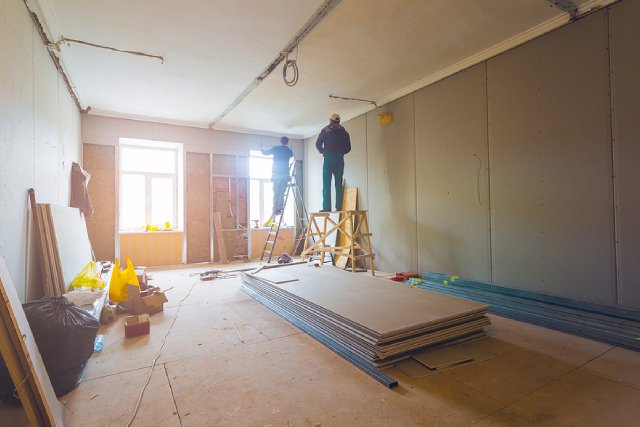
- Demolition and reinstatement: Hacking, disposal, and base building preparation.
- Construction works: Partitions, ceilings, carpentry, flooring, and painting.
- Mechanical and electrical works: Lighting, power points, data cabling, and air-conditioning adjustments.
- Compliance and safety: Fire protection works and statutory requirements.
Understanding these components helps explain why two offices of the same size can end up with very different renovation budgets.
2026 office renovation cost benchmarks in Singapore
While every project is unique, most businesses still need a realistic range to work with. Based on current market conditions in 2026, these are common benchmarks many companies are budgeting around.
1. Basic office refresh: $60–$90 per sq ft
This range suits businesses that want a functional update without major layout changes. Works typically include repainting, basic flooring replacement, lighting upgrades, and minor carpentry. It is often chosen by tenants renewing leases or refreshing older spaces for short- to mid-term use.
2. Mid-range office renovation: $90–$150 per sq ft
This is where many corporate offices fall. At this level, you can expect reconfigured layouts, new meeting rooms, upgraded pantry areas, custom carpentry, and improved lighting design. This range also allows for better material finishes and a more polished look that reflects brand identity.
3. High-end or premium fit-outs: $150–$220+ per sq ft
Premium projects often involve bespoke design elements, acoustic treatments, advanced IT infrastructure, executive finishes, and higher-spec mechanical systems. These spaces are usually client-facing or designed to attract and retain talent in competitive industries.
These figures are guides, not guarantees. Factors such as building condition, location, and complexity can push costs above or below these ranges.
Key factors that influence renovation costs
Several variables can significantly affect how much you end up paying per square foot. Being aware of them early helps prevent surprises later:
- Building age and condition – Older buildings may require additional rectification works.
- Unit condition at handover – Bare shell, partially fitted, or fully fitted units vary greatly in preparation costs.
- Design complexity – Curved walls, feature ceilings, or custom joinery add labour time.
- Mechanical constraints – Limited air-conditioning capacity or outdated systems often require upgrades.
- Project timeline – Tighter schedules may mean higher labour costs.
A clear understanding of these factors allows for more accurate budgeting discussions with your commercial renovation contractor in Singapore.
How layout trends in 2026 affect cost per sq ft
Office design trends directly influence renovation budgets. In 2026, several shifts are becoming more common across Singapore workplaces.
Hybrid-friendly layouts often require more meeting rooms and collaboration zones, which increase partitioning and M&E works. Wellness-focused designs may include better lighting, acoustic panels, and biophilic elements, adding material and installation costs. Meanwhile, flexible spaces demand modular systems that cost more upfront but offer long-term adaptability.
While these features can raise the initial cost per square foot, many businesses see them as investments rather than expenses, especially when they improve productivity and staff retention.
Where budgets often go wrong
Even with a clear cost range, office renovations can still run into trouble. Budget blowouts often happen not because of poor intentions, but because certain items were underestimated or overlooked.
Common problem areas include:
- Under-allowing for mechanical and electrical upgrades
- Late changes to layout after construction has started
- Vague specifications that lead to assumptions and variations
- Insufficient contingency for unforeseen site conditions
Being transparent about scope and expectations from the start is one of the most practical ways to avoid cost overruns in commercial projects.
Planning contingencies without over-padding your budget
Most professionals recommend setting aside a contingency of around 10–15 percent of the total renovation cost. This buffer helps absorb unexpected issues without derailing the project.
Contingencies are not meant to cover design indecision or scope creep. Instead, they protect you against genuine unknowns such as concealed services, structural constraints, or regulatory changes discovered during the build. A good contractor will explain what is covered by contingency and what is not, so expectations stay aligned.
Choosing the right contractor matters more than the lowest quote
It is tempting to compare renovation costs purely by price per square foot. However, the cheapest quote is not always the most economical in the long run.
An experienced contractor will:
- Provide clear breakdowns rather than lump-sum figures
- Flag potential cost risks early
- Coordinate consultants and authorities efficiently
- Offer realistic timelines that match the budget
This level of clarity helps business owners and facilities teams make informed decisions instead of reacting to surprises mid-project.
Timeline expectations for 2026 office renovations
Cost and time are closely linked. In 2026, typical renovation timelines in Singapore look like this:
- Small offices (under 2,000 sq ft): 6–8 weeks
- Medium offices (2,000–6,000 sq ft): 8–12 weeks
- Large or complex offices: 12–16 weeks or more
Rushed timelines often increase costs due to overtime labour and expedited material sourcing. Planning early gives you more control over both schedule and spend.
Making smarter renovation decisions in 2026
Office renovation costs per square foot are not just about numbers on a spreadsheet. They reflect design choices, operational needs, and long-term business goals. Taking the time to understand current benchmarks, cost drivers, and potential risks allows you to plan with confidence rather than guesswork.
Clear communication, realistic budgeting, and thoughtful design decisions go a long way in delivering an office that works for both people and performance.
Conclusion
Planning an office renovation in 2026 does not have to feel overwhelming. With the right guidance, clear cost benchmarks, and a well-structured approach, it becomes a strategic investment rather than a financial gamble.
At Kang Sheng Engineering, we support clients through design-build services and general contracting services for both residential and commercial projects. If you are considering an office renovation and want a clearer picture of costs, scope, and timelines, get in touch with our team to explore how we can help bring your plans together smoothly and responsibly.