Singaporeans have always had a complicated relationship with their homes. For many of us, the journey may commonly start with an HDB flat, where every square foot is negotiated carefully and clever storage is practically a love language. But somewhere along the way, through upgrading, renovating, or making the leap to private property, our expectations of what home looks and feels like have shifted dramatically.
What’s driving that shift in 2026? It’s a combination of factors: post-pandemic habits that made us spend far more time at home, a generation of younger homeowners with stronger design opinions, and a construction industry that has had to adapt quickly. The result is a residential landscape that looks and feels noticeably different from even five years ago, and the changes are happening across every housing type, not just at the premium end.
HDB flats are no longer just functional
There was a time when renovating an HDB flat meant picking a colour scheme, hacking a wall or two, and calling it done. That era is well and truly over. Today’s HDB homeowners, particularly those in the BTO generation, are approaching their homes with the same intentionality once reserved for private condominiums. Open-concept layouts that blur the living and dining areas, japandi-inspired palettes (think warm whites, natural timber, and muted sage greens), and built-in joinery that maximises every centimetre of storage are now standard expectations, not luxuries.
According to the Housing & Development Board, close to 80% of Singaporeans live in HDB flats, which means the design evolution happening in public housing has an outsized impact on how we collectively understand good design. When HDB homeowners start demanding terrazzo feature tiles, integrated appliances, and limewash-effect walls, those trends ripple outward into the broader market.
Residential constructions in Singapore have had to keep pace with this demand. Contractors and design-build firms are increasingly being asked to deliver condo-grade finishes in HDB spaces, which is a challenge that requires both technical skill and creative problem-solving within tight regulatory frameworks.
The condo aesthetic: What’s changed
Condominium living in Singapore has long been associated with a certain aspirational polish: the marble-look floors, the full-height curtains, the neutral developer palette waiting to be made one’s own. But in 2026, residents are pushing back against that blank-canvas approach and asking for more personality from the start.
A few trends are particularly prominent right now:
- Curved furniture and soft forms – sharp, angular furniture is giving way to rounded sofas, arched doorways, and organic shapes that make spaces feel more inviting and less corporate.
- Biophilic design – the integration of natural materials, greenery, and natural light isn’t just aesthetic; it’s increasingly tied to well-being. Expect feature walls of live moss, indoor planting ledges, and the use of rattan and stone alongside more conventional finishes.
- Multifunctional spaces – with hybrid work still very much the norm, the dedicated home office (or at minimum, a well-designed work nook) has become non-negotiable in new renovations.
- Statement kitchens – once tucked away and purely practical, kitchens are now a design focal point. Coloured cabinetry, fluted glass panels, and integrated dining peninsulas are increasingly common even in mid-tier condos.
Landed homes: Bigger canvas, bigger ambition
For those fortunate enough to live in or renovate a landed property, the design conversations are happening on a different scale entirely. Terrace houses, semi-detached homes, and bungalows are being reimagined with an almost architectural ambition, and homeowners are increasingly willing to invest in features that improve both liveability and long-term value.
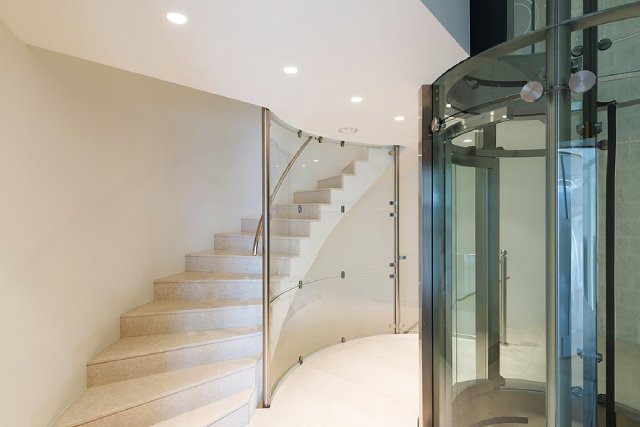
One notable shift is the growing inclusion of a lift for convenience in landed home multi-level living, particularly among multi-generational families or homeowners planning ahead for ageing in place. Beyond that, landed renovations in 2026 are heavily focused on:
- Indoor-outdoor integration – Singapore’s climate is a double-edged sword, but the best landed home renovations lean into it. Retractable glass walls, covered al fresco dining areas, and landscaped gardens that connect visually to interior living spaces are defining features of thoughtful landed design today.
- Natural and sustainable materials – homeowners are increasingly asking about the provenance and sustainability of their materials. Reclaimed timber, low-VOC paints, and responsibly sourced stone are all gaining ground.
- Smart home integration – automated lighting, climate control, and security systems are now expected inclusions in higher-end landed renovations, with systems becoming more accessible.
What’s driving these changes?
It would be easy to attribute all of this simply to TikTok and Instagram, and social media does play a role. But there are structural factors at work too.
The Urban Redevelopment Authority (URA) has been progressive in encouraging design quality and liveability in new developments, with guidelines that increasingly account for greenery provision, natural ventilation, and communal spaces. At the same time, a new wave of local interior designers and contractors has raised the bar for what clients can realistically expect at various price points.
There’s also a demographics angle worth noting. Younger Singaporeans who grew up consuming global design content are now reaching the age and income level where they’re making significant renovation decisions. They know what a wabi-sabi aesthetic looks like; they have opinions about grout colour. This is a client base that is informed, engaged, and not easily satisfied with off-the-shelf solutions.
The renovation process itself has evolved
Beyond the aesthetic trends, how Singaporeans approach the renovation process has changed. The demand for transparency, realistic timelines, and clear contracts has grown, particularly after the post-COVID renovation backlog left many homeowners with costly delays and disputes.
More homeowners are now gravitating towards design-build firms that can manage both the creative and construction sides of a project under one roof, reducing the coordination headaches that come with managing separate designers and contractors. This model tends to work well for both straightforward HDB renovations and more complex multi-storey landed projects where structural considerations come into play.
Conclusion
Whether you’re planning a fresh start in a new BTO, upgrading your condo’s interiors, or embarking on a full landed home reconstruction, getting the right team behind you makes all the difference.
Kang Sheng Engineering offers comprehensive design-build services and general contracting services for both residential and commercial projects across Singapore. From concept to completion, the team manages every aspect of your project, keeping quality, timeline, and budget aligned throughout. If you’re ready to bring your vision to life, reach out to Kang Sheng Engineering today and take the first step towards a home that truly works for you.