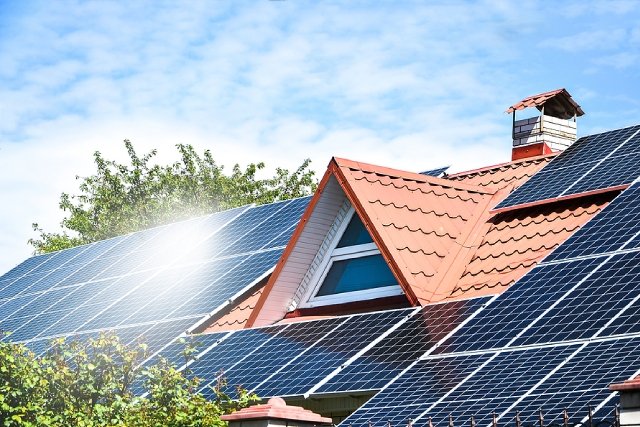
With electricity tariffs climbing and global energy prices growing increasingly unpredictable, more landed homeowners in Singapore are turning to solar panels as a practical way to take control of their energy costs. It is easy to see why. Singapore’s equatorial location means consistent, year-round sunshine, making rooftop solar one of the most sensible investments a landed property owner can make. If you have been sitting on the fence, we’ll walk you through everything you need to know, from understanding the costs and approvals to choosing the right panels and squeezing the most savings out of your system.
The numbers speak for themselves. According to the Energy Market Authority (EMA), there were 12,188 solar PV installations across Singapore as of the first half of 2025, with residential installations making up the largest share at 45.5%. The number of homes with solar has grown from just 1,749 in 2021 to 6,912 in 2025, which is a remarkable rise driven by falling installation costs, rising electricity bills, and the growing appeal of energy independence.
Why landed properties are ideal for solar
Unlike HDB residents or condo owners, landed homeowners in Singapore have a distinct advantage: you own your rooftop outright. There is no MCST to seek approval from, no shared roof space to negotiate, and no competing demands from other residents. Your roof is yours to optimise.
Landed homes also tend to have higher monthly electricity consumption of typically between 800 and 3,000 kWh or more per month, which means a properly sized solar system can generate meaningful savings from day one. If you own an electric vehicle, the financial case becomes even more compelling. Generating your own electricity to charge your car at home removes yet another recurring expense from your monthly outgoings.
This is also good to keep in mind for those who are planning new builds: designing solar-ready landed houses from the outset, with structural provisions and roof orientation taken into account, can save both time and money later.
How much does it cost?
Cost is usually the first question on every homeowner’s mind, and the good news is that solar systems have become significantly more affordable in recent years.
For a typical landed property in Singapore, you can expect to pay roughly S$18,000 to S$35,000 for a complete residential solar system, depending on system size, roof type, panel brand, and additional components such as battery storage. Most landed homeowners opt for systems in the 6 to 10 kWp range, which is generally sufficient to cover between 50% and 100% of a household’s monthly electricity usage.
Here is a rough breakdown to give you a sense of scale:
| System Size | Estimated Cost | Estimated Annual Savings |
| 6 kWp | ~S$18,000–S$22,000 | ~S$6,000–S$8,000 |
| 8 kWp | ~S$22,000–S$27,000 | ~S$8,000–S$12,000 |
| 10 kWp | ~S$27,000–S$35,000 | ~S$12,000–S$18,000 |
Figures are indicative and vary based on installer, equipment, and roof conditions.
Most homeowners are now achieving payback periods of under five years. Given that quality panels carry performance warranties of 25 to 30 years, that leaves well over two decades of essentially free electricity.
Getting the right approvals
Navigating Singapore’s regulatory process sounds daunting, but a good installer will manage most of it on your behalf. Here is what is typically involved for a landed residential property:
- EMA (Energy Market Authority): Handles the turnkey application for systems under 1 MWac, covering grid connection and safety requirements. Most residential systems fall well below this threshold.
- BCA (Building and Construction Authority): A structural assessment may be required, particularly for older buildings or installations that place a significant additional load on the roof.
- URA (Urban Redevelopment Authority): For standard rooftop panels that do not protrude above the building’s height, planning permission is generally not required. Building-integrated PV (BIPV) systems may need additional approval.
- SP Group: A bi-directional meter upgrade is needed for the Net Energy Metering scheme, which allows you to export surplus electricity back to the grid.
According to EMA’s implementation guide, a Qualified Person (QP) ensures the design and installation comply with all relevant regulations. A Licensed Electrical Worker (LEW) handles the final connection and commissioning. From initial survey to SP Group’s turn-on approval, the process typically takes six to twelve weeks for a landed property.
Engaging experienced contractor services is essential at this stage. A competent contractor will coordinate all submissions, liaise with the relevant authorities, and ensure your installation is fully compliant, so you do not have to chase paperwork across multiple agencies.
Choosing the right type of solar panel
Not all panels are created equal, and the right choice depends on your roof space, budget, and priorities.
1. Monocrystalline panels – The most popular choice for landed properties in Singapore. They offer the highest efficiency rates, perform well in high-heat conditions, and have a sleek, uniform appearance. If your roof space is limited, these give you the most power per square metre.
2. Polycrystalline panels – A more budget-friendly option with slightly lower efficiency. They work well on larger roof areas where space is not a constraint.
3. Thin-film panels – Lightweight and flexible, making them suitable for certain roof types, but they generally deliver lower efficiency and are less commonly used in residential settings.
For most landed homes, monocrystalline panels are the recommended choice, particularly given the tropical heat and the need to maximise output from a finite rooftop area.
Maximising your energy savings
Installing solar is just the first step. To get the most out of your system, keep these points in mind:
- Sell your surplus back to the grid. Through the Enhanced Central Intermediary Scheme (CIS-E), excess solar electricity that goes unused can be exported to SP Group, compensated at prevailing wholesale rates. As of early 2026, the Net Energy Rebate rate sits at approximately S$0.2046/kWh, a meaningful return that can further shorten your payback period.
- Consider battery storage. A home battery lets you capture surplus solar energy produced during daylight hours and draw on it later in the evening, further cutting your dependence on the grid. This is particularly worthwhile if you own an EV.
- Time your high-consumption appliances. Running your dishwasher, washing machine, and dryer during peak solar generation hours (roughly 10am to 3pm) allows you to consume solar electricity directly rather than drawing from the grid.
- Keep your panels clean. Singapore’s humid climate and occasional haze mean dust and grime can accumulate on panels, reducing output. A simple rinse every few months is usually sufficient to keep things running efficiently.
- Monitor your system. Most modern inverters come with monitoring apps that let you track daily generation, consumption, and export in real time. Keeping an eye on your system helps you spot any drop in performance early.
What to look for in a solar installer
With a growing number of firms offering residential solar in Singapore, choosing the right installer is key. Look for companies that employ Licensed Electrical Workers (LEWs) in-house, handle all regulatory submissions end-to-end, offer transparent pricing with itemised quotes, and provide clear warranty documentation for both panels and inverters. A good installer should also conduct a thorough site assessment before proposing a system size, not simply give you a quote over the phone.
Conclusion
Going solar is one of the smartest long-term investments you can make as a landed homeowner in Singapore, and having the right team behind you makes all the difference.
From residential to commercial projects, Kang Sheng Engineering delivers full-scope design-build and general contracting services. Whether you are planning a new build with solar integration in mind, undertaking a major renovation, or simply want a team that understands the full scope of your home improvement goals, we bring the expertise and project management capability to deliver. Our end-to-end approach means you have a single, reliable point of contact at every stage. Get in touch with Kang Sheng Engineering today to find out how we can help you build smarter, more energy-efficient spaces that are built to last.